
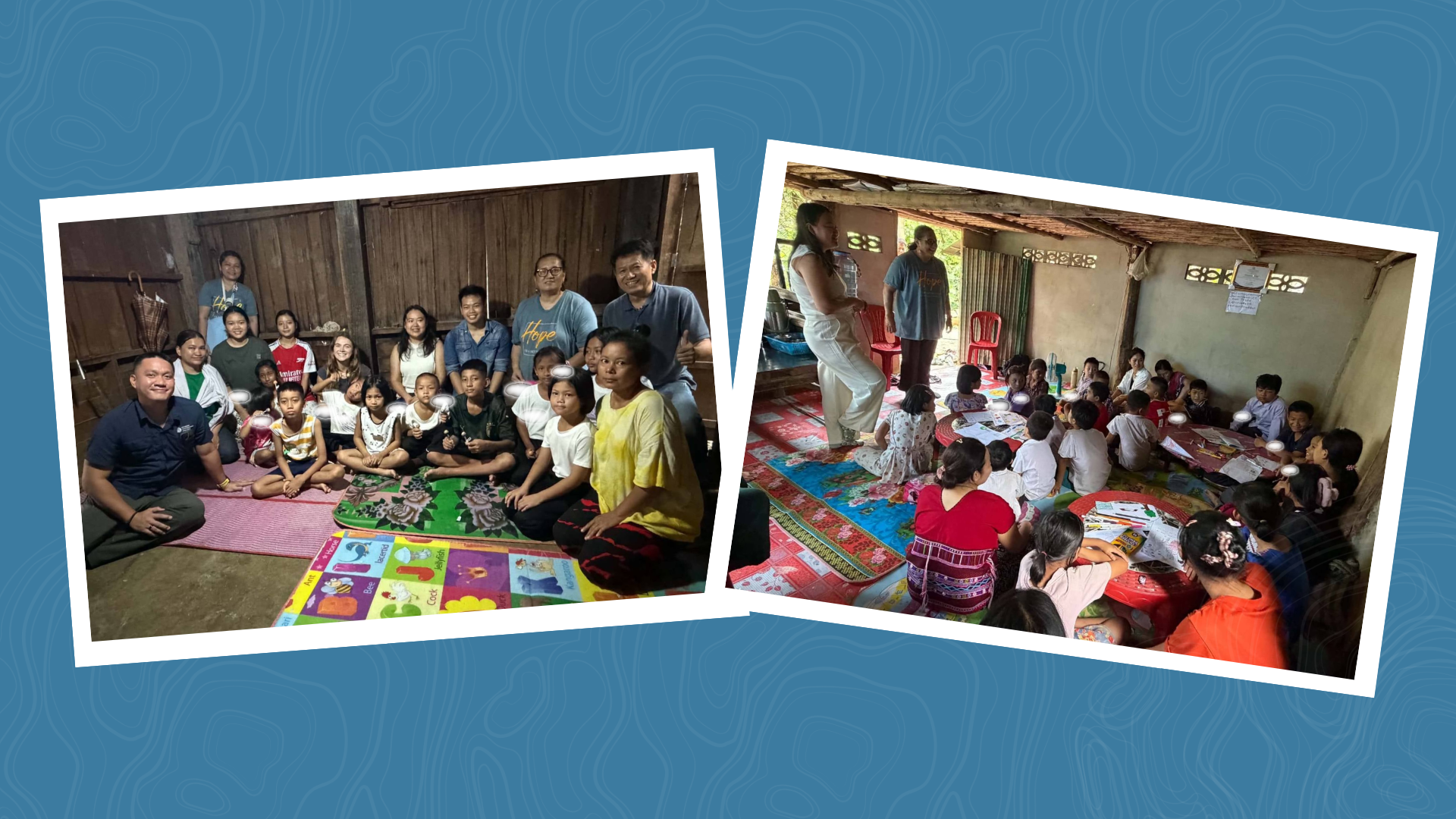
The laughter of children competing with the breeze along the Mae Sot border is a sound that stays with you. It is an echo of enduring hope, a vibrant testament to resilience persisting through profound hardship and a deeply uncertain future. When you walk through the border regions, the juxtaposition of joy and struggle is immediate. Children invent games in the dust, their imaginations transforming their limited surroundings, while their parents carry the heavy, invisible burden of displacement.
From 6 to 8 August 2026 a dedicated coalition comprising teams from Nazarene Compassionate Ministries (NCM), the Southeast Asia field, and leaders from the Church of the Nazarene in Thailand embarked on a critical journey to Mae Sot District in Tak Province. Their shared mission was to visit, encourage, and walk alongside local communities and children’s ministries operating directly on the Thailand-Myanmar border. Historically, and increasingly today, Mae Sot serves as a vital, temporary refuge for thousands of families fleeing conflict and instability in their homeland. Currently, over 30,000 displaced persons live in established camps and informal settlements in this region. Among them are countless children growing up under severe physical and systemic limitations, knowing only the perimeter of their temporary sanctuary.
The Harsh Realities of Displacement
This journey revealed a deeply poignant and often heartbreaking reality. The daily lives of these families are defined by barriers. Many Myanmar families reside in makeshift shelters constructed from whatever materials can be salvaged or donated, resulting in structures highly vulnerable to the elements. Beyond the physical living conditions, parents face the crushing inability to secure stable employment. Strict legal restrictions and a lack of recognized travel documents confine them to the immediate area, cutting them off from local economies and the dignity of providing for their households.
Consequently, a staggering number of children fall through the cracks of the system, entirely deprived of the quality education and childhood development resources available to most kids outside the camps. They are caught in a legal and social limbo, waiting for a future that feels perpetually out of reach.
Empowering Through Health and Hygiene
Holistic ministry requires addressing both the spiritual and the intensely practical needs of a community. During this visit, the NCM and local church teams collaborated with Emma, a researcher from Point Loma Nazarene University (PLNU) in the United States. She joined the expedition to conduct on-the-ground research for a project titled “Realities of Menstruation: Thailand.”
In displacement camps, reproductive health and basic hygiene are frequently overlooked in the face of immediate crises like food and shelter. Yet, the lack of access to sanitary supplies, clean water, and health education creates immense barriers for young women, often causing them to miss out on what little educational opportunities they have and impacting their personal dignity. This PLNU partnership is vital for gathering accurate data to improve overall health interventions, but it goes far beyond academic research. The initiative actively aims to empower these vulnerable groups—especially young women and mothers—with practical, life-changing knowledge, breaking stigmas and improving their daily quality of life in tangible ways.
Education and Spiritual Refuge
Amid these compounded challenges of poverty, displacement, and limited resources, the Church of the Nazarene and NCM recognize an essential opportunity to step into the gap. True support requires presence. By intentionally building trust and relationships with local community leaders, the ministry has established safe spaces for learning and growth.
The teams host regular Bible classes and offer English lessons, creating an environment that provides both practical skills and a deep spiritual refuge. English proficiency offers a rare bridge to future educational and employment opportunities for these children. Simultaneously, the Bible classes offer an anchor for their souls, teaching them that their circumstances do not define their worth. Witnessing the children’s bright smiles, their eagerness to learn, and their emotional growth during this return visit was a profound confirmation for the team. It proved that the consistent, faithful ministry in Mae Sot is yielding beautiful, tangible results. NCM continues to serve as a bridge, actively connecting the boundless love of God to those marginalized and pushed to the edges of society.
Joining the Mission
In a world increasingly filled with conflict and shifting borders, the collective support, financial sacrifice, and prayers of the global church represent far more than the delivery of material aid or classroom hours. To a family who has lost their home, these acts of service ignite a powerful spark of hope. They serve as a tangible assurance to these children and their parents that they are seen, loved, and never forgotten.
The needs in Mae Sot are vast, but the capacity for transformative grace is even greater. You can partner with this vital work in three specific ways:
- Pray: Ask for the physical protection, mental peace, and spiritual strength of the children and families living along the border, as well as for the local leaders ministering to them daily.
- Give: Your financial support directly funds essential educational materials, health and hygiene supplies for projects and the ongoing infrastructure of the border outreach programs.
- Advocate: Pass this story along to your local congregation, Sunday school class, or mission group to help raise awareness about the realities faced in Mae Sot.
Together, through persistent prayer and action, we can ensure that these fragile seeds of hope continue to flourish for generations to come.