
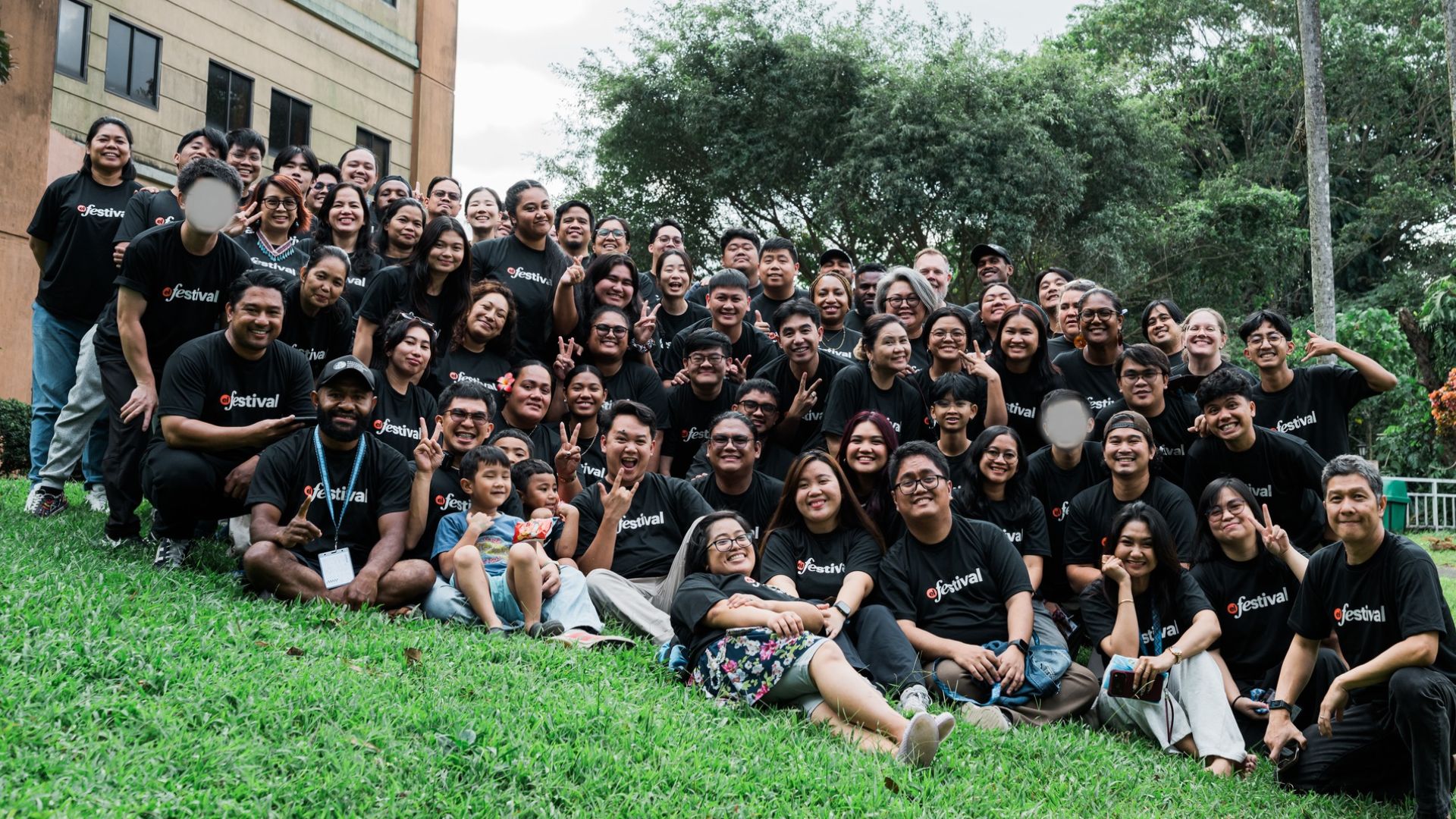
TAYTAY, Rizal, Philippines – More than 50 participants and leaders from across the Asia-Pacific Region gathered at Asia-Pacific Nazarene Theological Seminary (APNTS) on 2–7 November 2026 for El Festival Asia Communications Training, a six-day event designed to equip communicators to share the message of Christ through storytelling, filmmaking, and digital media.
With the theme “Communicating Christ by All Means Possible,” inspired by 1 Corinthians 9:22–23, the training emphasized the growing opportunities to use media and technology to reach people with the Gospel.
El Festival’s goal was not simply to build technical skills, but to develop a communications team across the Asia-Pacific Region that can effectively tell stories of faith, share what God is doing in their communities, and use creative media as a tool for evangelism and discipleship. The training also aimed to strengthen collaboration among field communications teams and equip participants to produce meaningful, culturally relevant content that reaches people beyond the walls of the church.
Throughout the week, participants learned from experienced local media professionals through practical workshops covering the stages of media production, from developing a story to creating and sharing the finished product.
The training began with storytelling, directing, and acting sessions led by Stephen and Mayen Cadd. Stephen, a filmmaker and graduate of The London Film School, has decades of experience producing evangelistic films and leading media production training in several countries. He introduced participants to the foundations of effective storytelling and directing, emphasizing the importance of communicating a clear and compelling message.
Mayen, a professional actress with more than 30 years of experience, led an interactive acting workshop that encouraged participants to step outside their comfort zones and discover how authentic performances can bring stories to life.
On the second day, photographer Joshua Chew and graphic designer Dek Khu introduced participants to photography and visual design. An off-campus photo walk gave participants a chance to apply what they learned, capture images, and receive feedback. The activity also encouraged collaboration and creative exchange among communicators from different fields.
The third day focused on video production. Director and cinematographer Timothy Dela Paz taught cinematography and color grading, demonstrating the process by filming and editing a video during the workshop. Dek Khu also led a session on motion design, introducing creative techniques participants can use for church ministries, social media, and future film projects.
Sessions on the fourth day explored the importance of effective communication across digital platforms. Rachel Cesneros led a workshop on social media management, while Erwin Balangue and Rico Bicol taught audio production and post-production. These sessions equipped participants with practical skills to create and manage quality media content using available resources.
While technical training was an important part of El Festival, the event continually reminded participants that communication’s purpose is not simply to produce excellent content, but to communicate Christ.
Throughout the week, devotional messages reinforced this calling. Crystal Gibbons, Global Missions Communications Coordinator, and Brian Utter, World Mission Broadcast Director, encouraged participants to see media and storytelling as opportunities to participate in God’s mission.
The training concluded with a commissioning service led by Rev. Marcio Batista, Asia-Pacific Mobilization Coordinator. He challenged participants to use their God-given gifts, creativity, and newly developed skills in service to the church and its mission.
For many participants, the experience was more than learning how to operate cameras, design graphics, or produce videos. It was an opportunity to rediscover how their talents and available resources could make a difference for the Kingdom of God.
“One of my biggest takeaways was learning the importance of understanding our equipment and making the most of what we already have,” shared Amy from the South Pacific Field. “We don’t always need the latest or most expensive tools to make an impact. Sometimes, it’s simply about using what God has already placed in our hands.”
For Hao, a participant from the East Asia Field, the experience was also deeply personal.
“God had not brought me all the way from Taiwan to the Philippines simply for a training program. He had brought me on a journey back home,” Hao shared. “It was not just a journey of learning new skills. It was a journey of returning to the Father’s heart, rediscovering His love, and learning to trust Him again.”
The impact of El Festival will extend beyond the six days of training. Participants will continue working together in their respective field teams to produce Scripture-inspired short films centered on missions. The films will be presented at the El Festival Film Competition in February 2027, giving teams an opportunity to apply their training while creatively communicating the Gospel.
As participants return to their countries and ministry assignments, they carry more than new technical skills. They return with a renewed commitment to tell the stories of how God is working across the Asia-Pacific Region and to equip others to do the same.
El Festival is part of the Asia-Pacific Region’s ongoing commitment to strengthen communications ministry, develop local communicators, and explore new ways to reach people with the Gospel.
In a world where digital media connects people across cultures, languages, and borders, these communicators are being equipped to take the message of Christ wherever their stories can reach—by all means possible.