
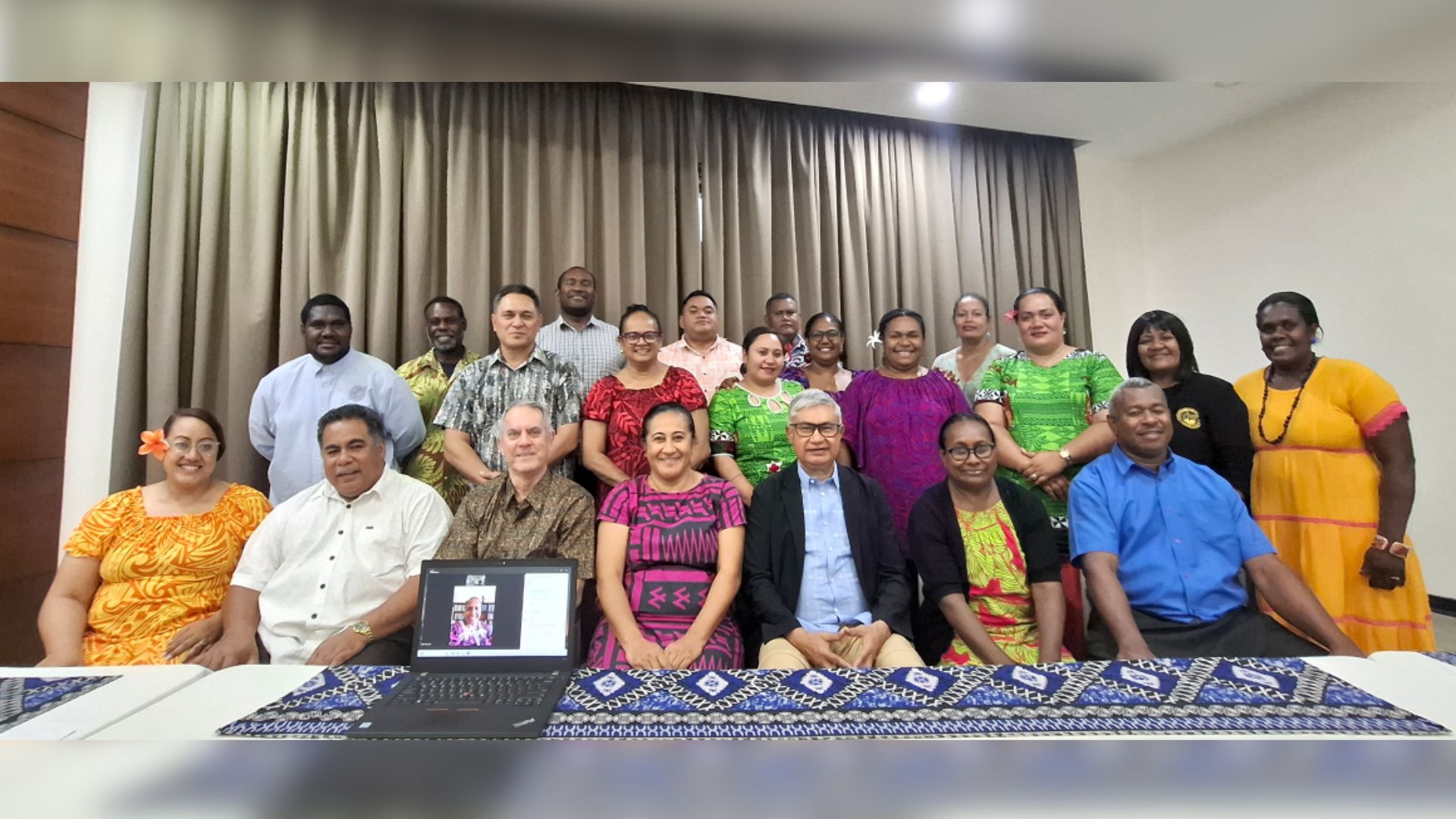
The South Pacific Nazarene Theological College held its annual Board of Trustees meeting on 2 December 2025 at the Nasau Resort in Nadi, Fiji.
SPNTC advances the Church’s ministry by offering Christian education in the Wesleyan Holiness tradition, training and empowering Christ’s followers in partnership with the Church of the Nazarene Districts. The college has produced many ordained ministers for churches in the South Pacific Field. Currently, more than 100 students are enrolled across five campuses. The Vanuatu and Solomon Islands campuses plan to graduate several students by the end of the 2026 academic year.
The five satellite campuses in the Island nations of Tonga, Samoa, Fiji, Vanuatu, and the Solomon Islands were represented at the BOT meeting by their local principals, District Superintendents, Faculty, Treasurers, and lay representatives. The Regional Director and Interim Field Strategic Coordinator (FSC) for South Pacific Field (SPF), Rev. Kafor Muaror, was present. Rev. Dr. Bruce Allder, the Asia-Pacific Regional Education Coordinator (APREC), chaired the meeting, which was facilitated by the SPNTC Chancellor, Rev. Leilani Roqara.
In previous BOTs, the meetings lasted three to four days; however, the 2025 BOT was scheduled for a single day, as some agenda items were to be discussed in detail during the SPF leadership meeting on 1 December 2025. Most of the technical resolutions that would affect SPNTC were covered during the Association of Nazarene Education System Asia Pacific (ANESAP) South Region Annual Meeting, held from the 3rd to the 5th of December 2025 at the same venue.
Each campus principal, the chancellor, and the Dean presented their reports on the financial status and funding arrangements, infrastructure and library updates, students and faculty, curriculum, and the approved course of studies. It appeared that the four active campuses in 2025 experienced similar setbacks. Some of them include limited facilities, for example, lack of access to physical and digital library, language barriers, course fees and funding, clashes in the delivery schedules for both faculties and students, as most campuses are on part-time mode.
Among the key needs identified for SPNTC are the availability of full-time faculty, a campus structure that supports full-time study, and the development of orality- and literacy-based non-accredited courses. These programs aim to support working professionals and individuals with limited access to formal education who seek to be equipped to serve as lay leaders.
Additional non-credited courses under consideration include basic financial management, office administration, language and cross-cultural studies, digital evangelism, and discipleship. These areas address practical needs within local church administration and ministry. Such courses may be offered as supervised refresher training and may contribute to a broader pathway toward ordination.
Other new opportunities identified include establishing Google Classroom for online students and gaining access to the ANESAP HUB, in collaboration with the Melanesian Nazarene Bible College (MNBC) in PNG, Nazarene Theological College (NTC) in Brisbane, Australia, and the APNTC in Taytay, Philippines. Having access to the OPALS library database via GNECsis at local campuses across Pacific countries will ease the burden of online research by ensuring access to approved sources and materials, proper referencing, and accurate citations. This should help address the issue of Artificial Intelligence (AI) and plagiarism.
The next SPNTC Board of Trustees meeting is tentatively scheduled for the first week of December 2026 in Fiji. The exact date and venue will be confirmed at a later date, with details communicated to BOT members.